Why charity language is holding us back
Language shapes systems.
In the social impact sector, young people are often described as beneficiaries. The word appears in grant applications, strategy documents, and impact reports. It sounds neutral - even professional.
But it isn’t neutral, and it isn’t harmless.
The language we use shapes how programs are designed, how power is distributed, and how we imagine young people’s role in changemaking.
What does the word “beneficiary” imply?
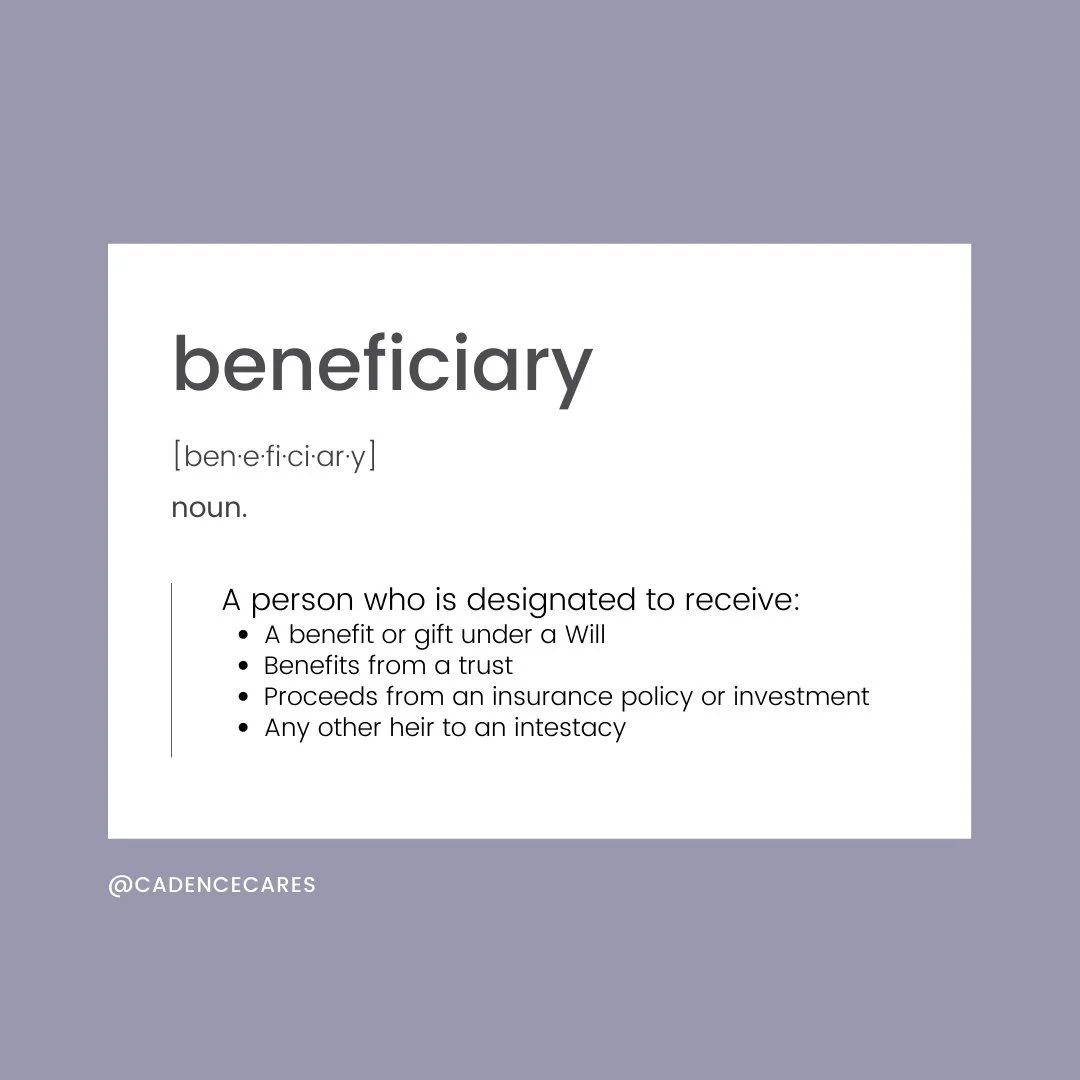
“Beneficiary” comes from the Latin beneficium, originally used for trusts and life insurance.
At its core, the term suggests that value flows in one direction: from the grantor to the recipient. The hero organisation acts. The young person receives.
This framing positions young people as passive recipients rather than active contributors. It implies that impact is delivered to them, rather than created with them.
Over time, this erodes agency and reinforces hierarchy: expertise sits with institutions, and young people are treated as subjects of intervention.
But young people are not empty vessels. They bring lived experience, insight, creativity, and contextual knowledge that institutions often lack. When we truly listen, we can create solutions that are richer, more relevant, and more enduring.
If not “beneficiaries,” then what?
It starts with designing relationships differently.
True impact comes when young people are not only included, but trusted to shape the work itself. That is the foundation of partnership.
Partnership means giving young people meaningful influence over strategy, priorities, and outcomes. It means involving them from the very beginning, not just at feedback stages, and creating structures where their voices actively shape decisions.
If our vocabulary signals hierarchy, our programs will reinforce it. But if we genuinely believe in partnership, we must be willing to redistribute influence and create mechanisms where young people define success alongside us.
What words should we use instead?
Shifting language is not about picking a trendier term — it’s about accurately reflecting young people’s role and agency. Words matter because they signal how much influence and trust young people are given. Consider this framework:
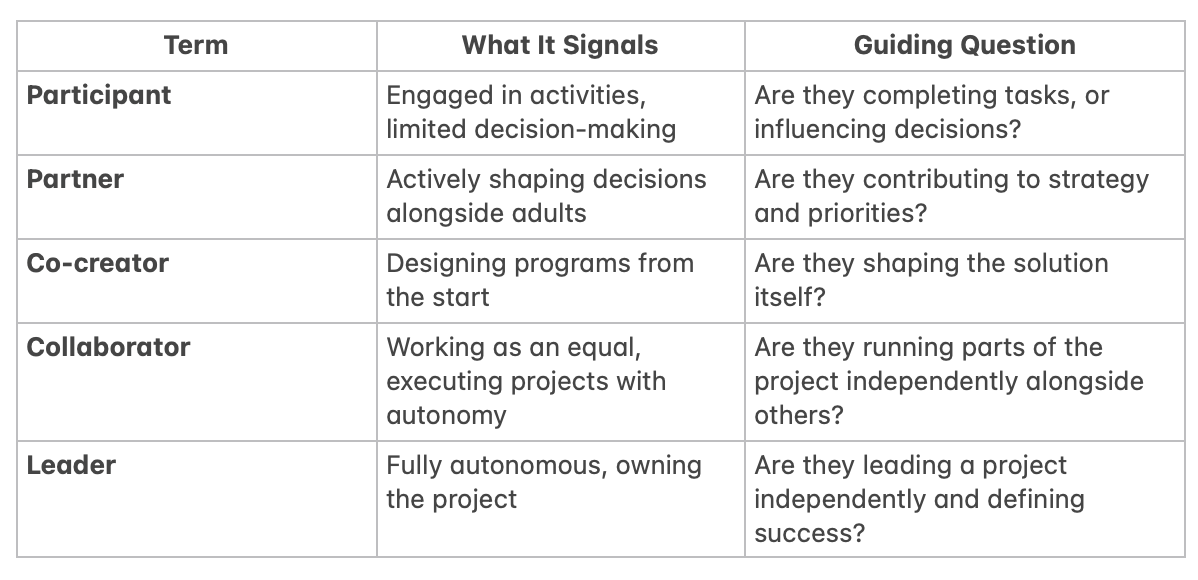
Each term represents a distinct level of power, participation, and trust. Choosing the right language changes how programs are structured, how relationships function, and how young people see themselves in the work.
Conclusion
When organisations apply for funding, we often mirror the terminology embedded in grant guidelines. If the form asks us to describe our “beneficiaries,” we do.
But those words shape how programs are framed, measured, and evaluated. They subtly reinforce a one-directional view of impact - even when the work itself is collaborative.
Instead of asking organisations to describe their beneficiaries, ask:
How would you describe your community?
Are young people participants, partners, co-creators, collaborators, or leaders?
At what stage are they shaping decisions — and how could that deepen?
Young people do not need to be rescued. They need to be recognised as partners in building the future — and in many cases, as leaders already doing so.
Changing our language will not fix everything. But it is a powerful place to start.