What will Australia’s Education look like in 2030?
Education in Australia is evolving at an unprecedented pace.
Each decade brings new technologies, skills, and societal demands that shape how students learn and prepare for the future. Understanding these shifts reveals not just what schools teach today, but how they must adapt for tomorrow.
The 2010s
The 2010s were defined by coding and robotics.
In 2014, Australia introduced its first mandatory Digital Technologies curriculum for all students from Foundation to Year 8. For the first time, digital capability was treated not as an elective enrichment activity, but as a core learning requirement.
The Technologies learning area was structured into two connected compulsory subjects:
Design and Technologies — where students used critical and creative thinking to develop innovative solutions to real-world problems.
Digital Technologies — where students applied computational thinking and information systems to design and implement digital solutions.
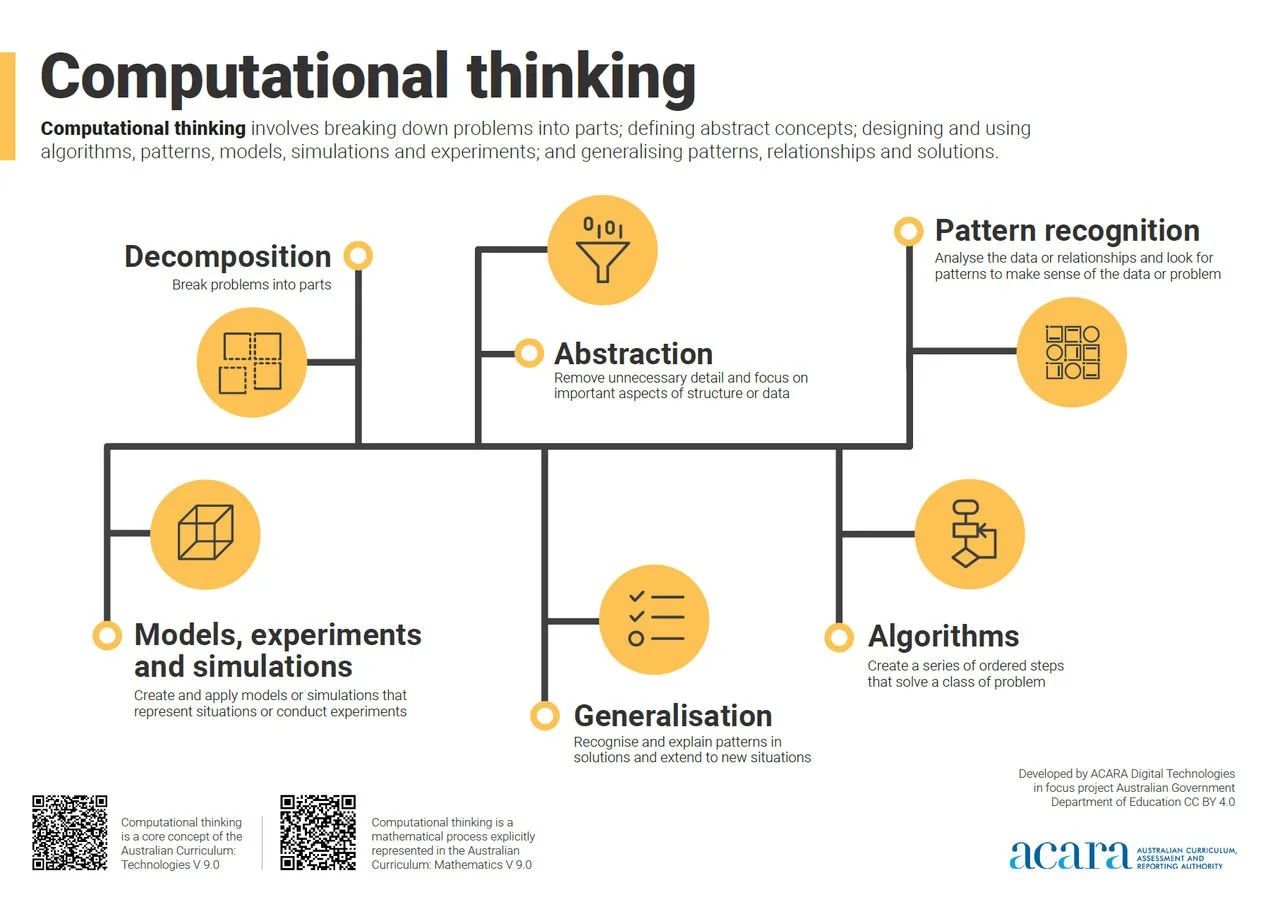
This formalised what the economy was already signalling: digital capability was foundational. Coding was no longer a niche technical skill, it was a baseline for participating in a digital economy. The rise of the app economy, and digitisation made technical skills tangible and economically valuable.
More importantly, this era demonstrated that education can respond quickly to economic shifts. It showed schools the value of applied, project-based learning, laying the groundwork for experiential learning in decades to come.
The 2020s
By the early 2020s, the focus had shifted from coding to entrepreneurship.
Australia’s startup ecosystem had grown rapidly. Atlassian made history as the first “unicorn” in the early 2010s, followed by companies like Canva and SafetyCulture reaching multi-billion-dollar valuations.
Venture capital investment grew from roughly AU$1 billion in 2019 to over AU$10 billion in 2022, while accelerators like Startmate and expanding angel networks bolstered early-stage investing across Australia and New Zealand.
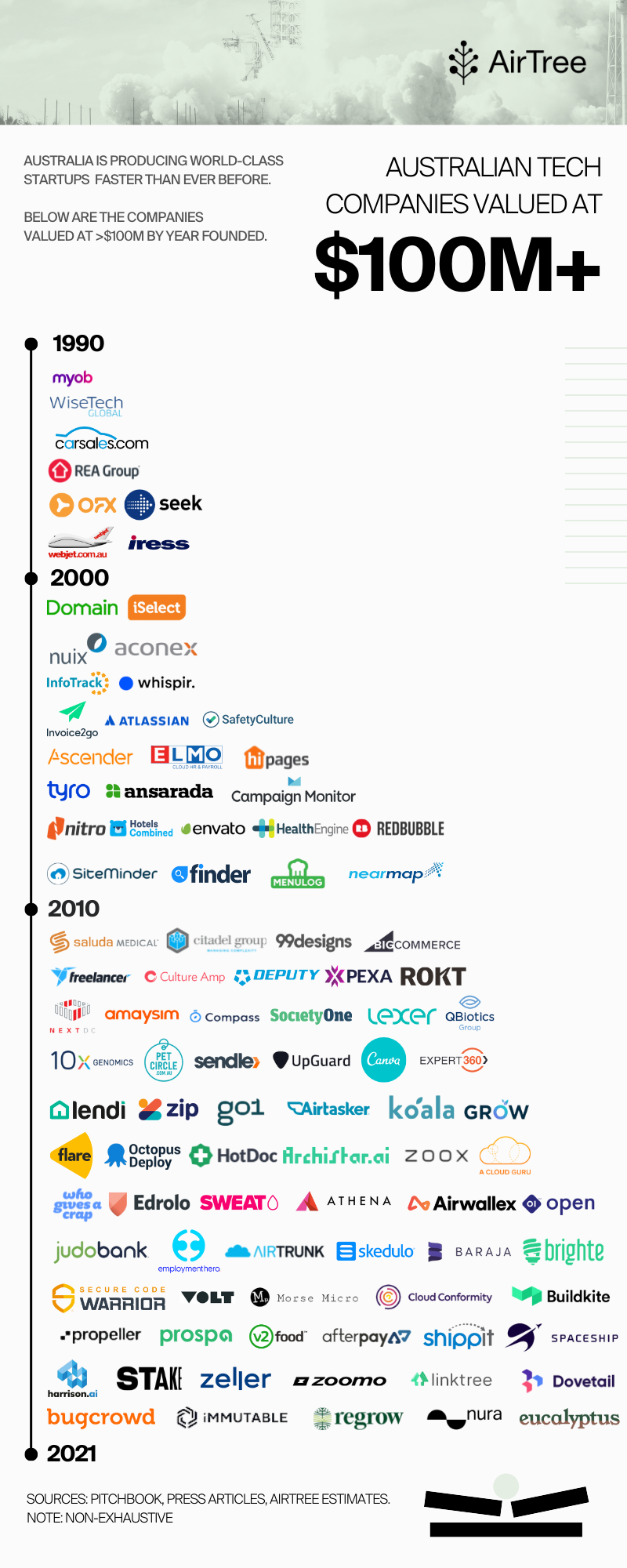
In the mid‑2020s, the Australian Government launched the Startup Year initiative to support university students building ventures, and universities reported growing participation in incubators and entrepreneurship programs.
By 2025, 47% of Australian secondary students said they want to start their own business, showing entrepreneurship is now aspirational rather than niche.
This highlighted a broader transformation when it came to how we learn. Students weren’t only learning passively how technology works; they were learning how actively to build, test and launch ideas.
Importantly, this era reinforced that learning by doing — building projects, pitching ideas, solving real problems — was as important as traditional academic skills.
The 2030s
Looking ahead to the 2030s, AI, VR, and AR are poised to define the next wave of education.
Some schools are already preparing: Melbourne High has appointed an AI Lead, while others are using AI career coaches to guide students through emerging technologies.
In South Australia, all public secondary students have been gratned access to EdChat - an AI tool similar to ChatGPT, designed by the Department for Education and Microsoft. More than 10,000 students have participated in the trial so far.

Students will no longer simply consume content. They will need to create with, apply, and critically evaluate intelligent systems. Advances in hardware, accessible AI tools, and ethical considerations are driving schools to rethink learning.
In this new era, students will spend less time on rote instruction and more time experimenting, building, and iterating, gaining the skills and judgment they need for the workforce of the future.
Conclusion
Across these three decades, we see a clear trajectory: from coding in the 2010s, to entrepreneurship in the 2020s, to AI and hardware in the 2030s, Australian education is moving toward experiential, applied, and future-ready learning.
Students are no longer just absorbing knowledge; they are creating, experimenting, and innovating.
By developing agency, resilience, and the ability to navigate complex systems, schools are preparing young people for the demands of the modern, rapidly evolving workplace — and for the portfolio careers of tomorrow.